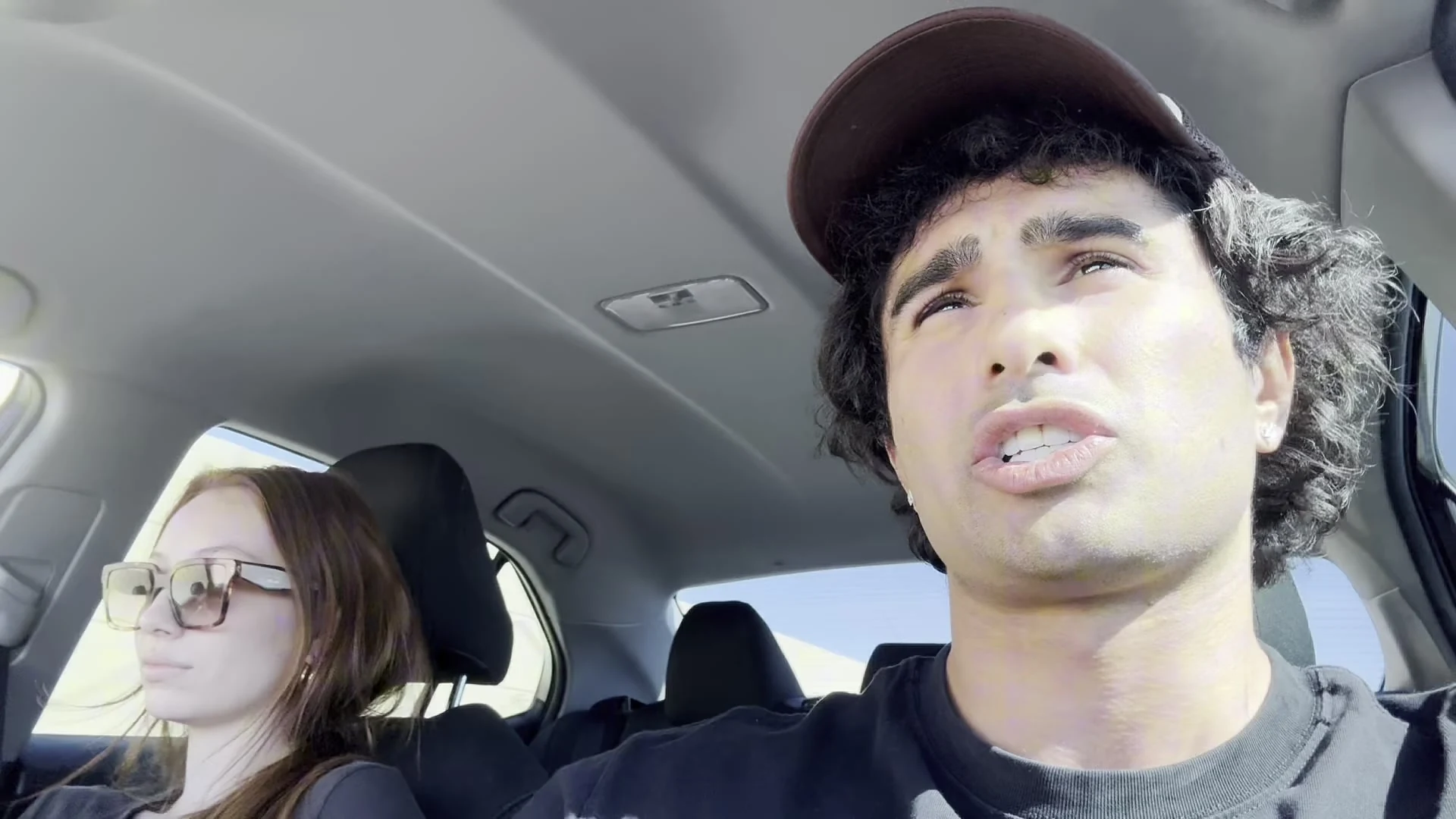
The account is gone. Not restricted, not shadowbanned, not "limited in reach." Removed. You type the handle and you get a page telling you it doesn't exist, which is a strange thing to read about several years of your own life.
I found out the way everyone finds out: I opened the app and it asked me to log in.
It wasn't for anything I posted
This is the part that people assume, so let's kill it early. I didn't get removed for posting something explicit. There was nothing on that account that broke the rules. It was gym photos, travel, a face, a dog, the occasional promo for something that was itself perfectly clothed. I was careful, deliberately, because I knew exactly how the wind blows on that platform and I had no interest in testing it.
I was removed for what I do off the platform. That's the whole of it. The content was compliant; the person wasn't. There's an entire category of account that stays permanently one report away from deletion, not because of any post but because of the job printed on the other side of the profile — and if you're in that category, you already know, because you've been quietly living with it for years.
The appeal is a hallway with no doors
You get a button. You press it. You are invited to explain yourself in a text box with a character limit that suggests nobody intends to read it.
Then you wait. Then you get an email — quickly, far too quickly for anyone to have actually looked — telling you the decision has been upheld. You appeal again. Same email. There's no name on it. There's no case number that means anything. There is no human being, anywhere in this process, who can be persuaded, because there is no human being anywhere in this process.
I know people who've spent months on it. Escalations, lawyers, friends of friends who "know someone at the company." I gave it a few weeks and then I stopped, because I could see what it was: not a decision I could argue with, but a shape I could only walk around.
What actually got taken
People hear "lost his Instagram" and think: vanity. Followers, likes, a number he was proud of. Genuinely, no. I don't miss the number.
Here's what I miss. The relationship. Not the audience as an abstraction but the specific people in there — the ones who'd been around since 2021, who messaged me on bad weeks, who I'd talk to like actual humans. That was a room full of people I knew, and the door was welded shut overnight, and I had no way to tell any of them where I'd gone. They weren't given a forwarding address. Neither was I.
Then the archive. Years of photographs, some of which existed nowhere else, because you don't back up your own life while you're living it. I hadn't downloaded a thing. Why would I? It felt permanent. It presented itself as permanent.
And then the boring, structural loss, which is the one that actually cost money: it was by some distance the biggest referral source to everything else I do. Every other account, every link, every place people could actually find or support my work — the traffic came through there. One removal, and the top of the funnel is simply gone. You don't get to keep the audience you built. You were only ever renting them.
They take a cut of your reach for years, and then they remove you with no notice, no human, and no recourse. That's not a policy. That's a landlord who can evict you for something you did at your other job.
The asymmetry
I want to be clear that I'm not claiming to be owed anything. It's their platform. It says so in the terms, in language I clicked through at nineteen like everybody else.
But let's at least name the trade honestly. For years you do unpaid labour that makes their product valuable — you post, you bring people in, you keep them scrolling, and they sell that attention. In exchange you are permitted to reach an audience they meter and throttle at their discretion. Then, at a moment of their choosing, for a reason you're not entitled to hear, they keep the audience and delete you.
Every part of that is legal. It's the imbalance I object to, not the legality. And the lesson isn't "platforms are evil" — it's that you should never have been building on rented ground in the first place, and I knew that, and I did it anyway, because it was easy and it was working.
The vacuum fills fast
Here's the second-order harm nobody warns you about. The instant your official account is gone, the impersonators arrive. Of course they do. There's a name with recognition attached and suddenly nothing authoritative sitting on it, so accounts appear using my photos, my handle with an underscore stuck in, sometimes a decent imitation of how I write — and they message people, and they ask for money.
And I can't point anyone at my real account to prove which one is me, because that's the account that was deleted. The platform removed the only thing that made the fakes obviously fake. I've written the whole thing out on my official statement page, and it's the reason that page exists at all. If someone claiming to be me approaches you anywhere, check it against that page first. I will never ask you for money in a DM.
What it forced
So: own the ground. It's an obvious lesson and I resent slightly that I had to learn it the expensive way.
A domain nobody can revoke. A site nobody can deindex on a whim. An email list where the relationship is mine and not a middleman's. Somewhere the biography is the true one rather than something a machine invented, and somewhere the record of what I've actually shot is written by the person who shot it.
That's what zanewalker.com is. Not a brand exercise. A backup. It exists because I learned what it feels like to have the main door bricked up while you're asleep, and I would rather not experience that twice.
What's left is on the links page — X is the main one now, and everything else is listed there, and that list is the only one I stand behind. All of it still sits on somebody else's servers. I'm not naive about that. Any of it could go the same way tomorrow.
Which is precisely why you're reading this here.